Technical note
The Time I Almost Wasted $4,200 on a Microscope We Didn't Need
Back in March 2024, I was sitting in our weekly procurement review, staring at a capital equipment request form that had me scratching my head. The form was for a research-grade microscope, and it listed a half-dozen different measurement tools on the same requisition—an electronic caliper, a 287 true-rms electronics logging multimeter, and even a note about figuring out how to use Mettler Toledo pH meter.
I'm a procurement manager for a mid-size materials testing lab, about 45 people. I've managed our equipment budget—roughly $180,000 annually—for over six years now. I've negotiated with dozens of vendors, documented every order in our cost tracking system, and built a pretty good radar for when a purchase is about to go sideways. And this one? It was screaming at me.
I'm not a metrology expert, so I can't speak to whether a specific 287 true-rms electronics logging multimeter is better than another for high-frequency data logging. What I can tell you from a procurement perspective is that when you see a team request a Zeiss inverted microscope alongside an electronic caliper and a pH meter, you've got a classic case of 'we threw everything at the wall' planning. And that's where the money disappears.
The Temptation to Just Sign It
Honestly, the easiest thing would have been to approve it. The lead scientist who submitted it is a brilliant guy—legitimately knows his stuff. When he says he needs a Zeiss Axioplan microscope for advanced fluorescence imaging, I don't question the science. I question the process.
"The quoted price for the Zeiss system was $42,500. The budget line item was $38,300. That's a $4,200 gap that someone expected to 'figure out later.'"
If I remember correctly, the requisition came through on a Tuesday afternoon. I had a meeting the next morning with the lab manager, and I almost just forwarded it to finance. But something bugged me. The team had listed a Zeiss Axioplan microscope by name, but when I dug into the specs, they'd pasted a configuration number from an old quote. I called the Zeiss rep. Turned out that configuration had been replaced by a newer model with different objectives. The price had changed.
The Assumption That Nearly Cost Us
Here's where I made my own mistake. I assumed the scientist had already verified the configuration was current. I'd been burned before assuming 'same specifications' meant identical performance across different equipment, but I hadn't yet learned to apply that same skepticism to model numbers within the same brand.
The quote we had was for a Zeiss inverted microscope configured for live-cell imaging. But the team's actual project was materials analysis—mostly polymer surfaces. The inverted scope would work, but it was overkill. What they really needed was a Zeiss Axioplan microscope with transmitted light and basic fluorescence. The cost difference? About $8,000.
That's not a small number. That's a calibration contract for two years. That's a high-end electronic caliper set for the QC lab. That's a proper course on how to use Mettler Toledo pH meter so the lab doesn't keep having to redo pH tests because of operator error.
I scheduled a 30-minute technical clarification call. The scientist almost canceled—he was busy. I insisted. On that call, it came out that the team had just assumed the older model line was the only option available. They hadn't even asked Zeiss what alternative configurations might fit their actual workflow.
The Turning Point
The Zeiss rep, to their credit, offered to run a comparison. They sent over a side-by-side spec sheet for the inverted microscope option vs. the Axioplan stand. The inverted had more automation, a higher-end camera port, and a $4,200 price premium for features the team admitted they'd probably never use.
That $4,200 number stuck in my head. Because it wasn't just the upfront cost. I calculated worst case: if we'd approved the wrong system, the team would have had to either learn a more complex workflow or, worse, redo their purchase request six months later when they realized the limitations. Best case: they'd have overpaid for unused capability.
I kept asking myself: is $4,200 worth potentially delaying the project by a quarter? The expected value said yes—the cheaper option met all requirements. But the downside of being wrong (a system that didn't perform) felt catastrophic for a lab relying on that data for client certifications.
What We Actually Did
We went with the Zeiss Axioplan microscope configuration. Saved $4,200. Used that budget to upgrade the lab's measurement tools: a proper set of electronic calipers from a reputable brand, a 287 true-rms electronics logging multimeter for electrical testing, and a Mettler Toledo pH meter with a subscription to their calibration kit.
I can only speak to our situation—a mid-size lab with predictable project cycles. If you're a high-throughput clinical lab with diverse research needs, the inverted microscope might be the right call. But the principle stands: verify the spec before you sign.
The Lesson That Stuck
After tracking over 200 equipment orders in our procurement system, I've found that roughly 18% of our budget overruns came from ordering equipment that was mis-specified at the requisition stage. We implemented a 'tech clarify before PO' policy after this incident. It's saved us an estimated $8,000 in potential rework and corrections over the following year.
Honestly, the 15-minute phone call I almost skipped taught me more than six years of spreadsheet analysis. Sometimes, the most expensive thing you can do is assume the first quote is the right one.
If you've ever had a purchase order for precision instruments that felt 'off' but you couldn't put your finger on why—trust that instinct. Ask one more question. It's worth the time.
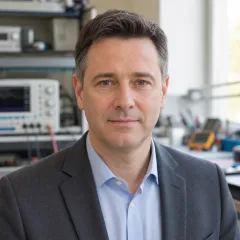
Marcus Feld
Marcus Feld is an electrical test and measurement analyst specializing in multimeters, oscilloscopes, clamp meters, insulation testers, spectrum analyzers, and data loggers. He applies IEC 61010-2-030 and IEC 61010-031 concepts while examining measurement category, bandwidth, true-RMS response, input loading, and stated uncertainty. His work helps maintenance engineers and test teams choose safe instruments with performance suited to the signals and environments they actually measure.