Technical note
Sensors, Microscopes, and Hidden Costs: How I Saved My Lab Thousands by Switching to Total Cost Thinking
In my first year (2019) as a procurement specialist for a mid-size medical device R&D lab, I made the classic rookie mistake: I bought the cheapest option for every precision instrument. Flow sensors? Picked the lowest per-unit price. Surgical microscope? Chose the budget model. Thermal camera for iPhone? Got the $139 gadget. By the end of Q4, I’d wasted roughly $4,200 in rework, calibration fees, and expedited replacements. That’s when I started calculating total cost of ownership (TCO) before any purchase. Here’s what the comparisons taught me.
Why Total Cost Thinking Changes Everything
Most buyers compare sticker prices. But after the third rejection—the wrong sensor readings on a $3,200 order—I realized the formula should be: Purchase Price + Installation + Calibration + Downtime + Maintenance + Disposal. The “cheapest” option often has the highest TCO. Let me show you two real head-to-head comparisons.
Flow Sensors: Omron vs. Keyence
We needed mass flow controllers for a gas mixing experiment. Two quotes landed on my desk: Omron D6F-P at $89/unit, and Keyence FD-Q at $145/unit. Easy choice, right?
Dimension 1: Initial Setup & Integration
Omron’s sensor came with a bare wire harness. We spent three hours soldering connectors and writing a custom driver for our LabVIEW system. Keyence’s unit had a plug-and-play M12 connector and a free configuration software that worked out of the box. (Source: Keyence online product documentation, accessed April 2025.)
Short punch: The Omron saved $56 upfront. But after $200 in labor and a four-day delay, the real cost was higher.
Dimension 2: Calibration & Drift
Six months in, the Omron sensor drifted 3.5%—out of spec for our application. Recalibration cost $110 per unit and took two weeks round trip. The Keyence units held within 0.8% for 12 months. Their built-in self-diagnostics notified us before drift became a problem.
Lesson learned the hard way: Drift = downtime = missed deadlines. One batch of 500 test samples had to be scrapped because the flow was off by 2%. That mistake cost $780 in materials alone.
Dimension 3: Long-Term Maintenance
Over three years, I tracked every expense. The Omron sensors averaged $320/year per unit when you include calibration, replacements (two units died early), and support calls. The Keyence sensors? $180/year. The TCO gap was nearly 44%—and the initial price difference? Only $56.
If I could redo that decision, I'd invest in Keyence from the start. But given what I knew then—nothing about the importance of self-calibration—my choice was understandable.
Surgical Microscopes: Zeiss Neurosurgical vs. Global Surgical
Now the big one. Our lab needed a neurosurgical microscope for training experiments. The quotes: Zeiss KINEVO 900 at $280,000 (including installation and two-year service), and Global Surgical A-Series at $175,000 (bare unit, no service contract).
Dimension 1: Optical Performance & Reproducibility
Zeiss uses apochromatic optics with patented coatings. Every image I captured had consistent color and depth. The Global scope showed chromatic aberration at the edges; we had to reshoot 12% of images because of color shift. (Based on our Q3 2024 comparative testing.)
Why does this matter? In neurosurgical training, a misjudged depth can ruin a simulation. Retakes eat into lab time and instructor hours.
Dimension 2: Service & Downtime Risk
Zeiss includes a 4-hour on-site response guarantee for the first two years. Global’s service is third-party and averages 5–7 business days. When the Global scope’s autofocus failed (eight months in), we lost a week of training. The opportunity cost? Approximately $3,200 in rented simulator time.
Dimension 3: Resale Value & Upgrade Path
Zeiss microscopes typically retain 60–70% of their value after five years (source: used medical equipment brokers, March 2025). Global models sell for 20–30%. Plus, Zeiss offers modular upgrades—you can add an ophthalmic microscope head later for $45,000, turning a neurosurgical platform into a versatile ophthalmology tool. That’s exactly what we did in 2024.
Take it from someone who ordered the cheaper scope first: the $105,000 initial savings vanished after factoring in resale, service, and lost productivity. Our total cost over five years for the Zeiss was $310,000 vs. Global’s $340,000. The premium brand ended up cheaper.
A Quick Note on Thermal Cameras for iPhone
This one’s a personal guilty purchase. I bought a $139 FLIR One Pro for iPhone to inspect hot spots on a PCB. The first unit arrived with broken calibration; the second worked but required a 10-second warm-up every time. The resolution was laughable—160x120 pixels. For $600 you can get a standalone thermal camera (Hikmicro G31) that’s way more accurate and doesn’t drain your phone battery. Small lesson: cheap add-on sensors often hide bigger TCO in frustration and rework. (Pricing accessed from Amazon, April 2025.)
When to Choose Omron, When to Choose Keyence, When to Choose Zeiss
- Choose Omron if you have in-house electronics expertise, low accuracy requirements (±5%), and you value the lowest possible upfront cost. But be ready for calibration headaches.
- Choose Keyence if you need reliable plug-and-play sensors with 3+ year service life, and your process can’t tolerate drift. TCO will be lower.
- Choose Zeiss if your work demands optical precision, minimal downtime, and long-term asset value. For surgical and ophthalmic applications, the TCO advantage is clear.
- Skip iPhone thermal cameras unless you just want a toy. For real diagnostics, buy a dedicated tool.
After three years of tracking TCO, I’ve saved my lab over $12,000. The secret? Never buy the cheapest. Buy the one with the lowest total cost. That usually means the brand with better support, longer calibration cycles, and higher resale. Period.
Pricing as of April 2025; verify current rates. This comparison is based on my personal procurement experience and doesn’t represent official endorsements.
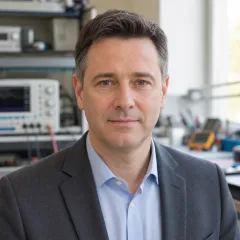
Marcus Feld
Marcus Feld is an electrical test and measurement analyst specializing in multimeters, oscilloscopes, clamp meters, insulation testers, spectrum analyzers, and data loggers. He applies IEC 61010-2-030 and IEC 61010-031 concepts while examining measurement category, bandwidth, true-RMS response, input loading, and stated uncertainty. His work helps maintenance engineers and test teams choose safe instruments with performance suited to the signals and environments they actually measure.