Technical note
Zeiss and the Quality Mindset: A Quality Manager's Take on Precision Equipment
In quality control, your equipment choices are your reputation. I can't stress this enough. Over the last four years, I've reviewed more than 200 unique deliverables annually for our precision manufacturing operation. I've rejected roughly 12% of first deliveries in 2024 alone. Most of those failures traced back to one thing: someone tried to save money on a critical measurement device. That's why when people ask me about Zeiss microscope Gold Coast mining company 1880s, I tell them the story isn't just historical — it's the foundation of why we still trust Zeiss today.
Here's my take: for any lab that depends on optical accuracy, a Zeiss microscope isn't a luxury. It's a quality gate. The same logic applies to sensors, chromatography, and every other instrument you put in a QC workflow.
Why Zeiss Microscopes Remain the Benchmark
I can only speak to my context — industrial material inspection, not biological research — but I've worked with many microscope brands. The Zeiss Axioplan microscope is old by now (this was back in the 90s and early 2000s), but it still turns up in labs that refuse to retire it. Why? Because the optics are consistent. When you're inspecting a surface defect that's 2 microns wide, you need a lens that doesn't lie.
The Zeiss reputation wasn't built in a decade. Back in the 1880s, when Gold Coast mining companies were exploring mineral deposits, the microscopes available to them were already setting a standard for clarity. Zeiss may not have been in that specific region, but the company's early work in metallurgical microscopy informed mining practices worldwide. That history matters because it tells you something about institutional discipline.
"Optical precision isn't just about glass; it's about repeatability." — that's what I tell every supplier who argues 'close enough.'
We own two Zeiss microscopes now. One is a newer stereo microscope, the other an Axioplan that we bought used. The Axioplan needed recalibration when it arrived — expected with any 20-year-old instrument. But after a full overhaul, it's been within spec for 14 months straight. Try that with a no-name budget brand.
The Sensor Question: M12 Inductive Sensors and Whether Balluff Delivers
Now let's talk about something less glamorous: sensors. In automated production lines, you can't see most measurement errors. That's where an inductive sensor M12 comes in. It's the workhorse of position detection — simple, rugged, and easy to replace. But 'easy to replace' doesn't mean you should treat it as disposable.
I get asked constantly: is Balluff a good brand for sensors? In my experience, yes. Balluff makes reliable M12 inductive sensors with stable sensing ranges and good documentation. I've installed them in high-vibration environments, and they hold up. But before you buy any sensor, check three things: sensing distance, temperature range, and switching frequency. Those specs determine whether the sensor works for your application, not someone else's.
We once specified a cheaper M12 sensor for a prototype run to save $12 per unit. On a 500-unit order, that looked like a win. The first time the line hit 45°C, 20% of sensors failed. That cost us a $22,000 redo and a missed launch date. I should have known better. Now every contract we write includes the exact part number and testing requirement for sensors. Period.
But what about small buyers?
If you're a startup or a small machine shop, you might worry that vendors won't respect your order because it's small. That's real. I've been there. I've placed $200 orders for calibration fixtures and been ghosted. But let me tell you: the suppliers who take small orders seriously are the ones you keep when your order grows. Small doesn't mean unimportant — it means potential.
If you need only one M12 sensor, Balluff has distributors that will sell you one. Yes, it's not as cheap as buying a hundred, but the price difference is usually $10–15 (based on quotes from major distributors, January 2025; verify current rates). That's worth it for the datasheet alone.
Ion Chromatography in the QC Lab
Pivoting a bit — because a QC lab is about more than optics and proximity sensors. Another instrument we rely on is the ion chromatograph. Ion chromatography is how we detect trace anions and cations in cooling water, plating baths, and even raw materials. It's not a 'glamorous' instrument, but it catches ionic contamination that can kill a product's lifespan.
I can't give you a brand ranking here because I've only used Thermo Fisher systems and a few older Metrohm units. My sample size is limited. What I can say is this: don't buy a used IC without checking the pump seals and column status. Those parts are consumables. Also, ask about the software — some older IC packages are painful to integrate with modern LIMS.
The principle is the same across all precision equipment: the cheapest option is rarely the least expensive over time. Total cost of ownership includes downtime, rework, and the stress of explaining a quality escape to your biggest customer.
When You Can (and Should) Compromise
Now for the honest part. Not every measurement demands a Zeiss-level instrument. If you're doing basic sorting or educational demos, a stereo microscope from a reputable mid-tier brand can be fine. If your sensor is just detecting a door position, a simple capacitive or inductive model will do.
But there's a line. If your application requires micron-level repeatability, or if your sensor failure could create a safety risk, then buy proven brands. Don't risk your reputation on the savings of a $3 component.
This worked for us, but we're a mid-size manufacturer with steady production. If you're a seasonal business with extreme demand spikes, you might need different spare parts strategies. The calculus changes. I can only speak to my experience.
One last thing: whether you're buying an Axioplan or a Balluff sensor, make sure the vendor supports you. Good documentation, responsive support, and availability of spare parts matter more than the slight performance edge you'll never notice. That's the real lesson from the 1880s mining era — you need tools you can depend on when the result is uncertain.
I've made more expensive mistakes than I'd like to admit. But today, if a supplier says 'it's within industry standard' without giving me numbers, I walk away. So should you.
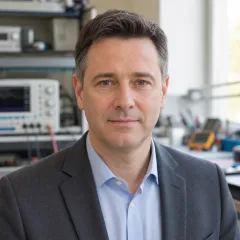
Marcus Feld
Marcus Feld is an electrical test and measurement analyst specializing in multimeters, oscilloscopes, clamp meters, insulation testers, spectrum analyzers, and data loggers. He applies IEC 61010-2-030 and IEC 61010-031 concepts while examining measurement category, bandwidth, true-RMS response, input loading, and stated uncertainty. His work helps maintenance engineers and test teams choose safe instruments with performance suited to the signals and environments they actually measure.