Technical note
The Real Cost of Precision Instruments: What Procurement Misses
-
The problem you think you're solving
-
Deeper cause #1: A spec is not a guarantee
-
Deeper cause #2: We don't budget for protection
-
Deeper cause #3: Calibration is a skill, not a checkbox
-
What the 'problem' actually is
-
The real cost of ignoring this
-
The fix: make TCO a habit, not a spreadsheet
-
Bottom line
If you've ever signed off on a precision instrument purchase and then watched support costs eat into next quarter's budget, you know the feeling. You picked the right spec. You got three quotes. The finance director approved the one in the middle. And yet somehow, at the end of the year, that instrument ended up costing 20% more than the invoice said.
I'm a procurement manager at a 40-person industrial testing lab. I've managed our equipment budget—about $180,000 a year—for six years. I've tracked every invoice, every calibration bill, every rush order for a lost cable. And over the last 18 months, I audited our 2023 and 2024 spending to find out where the real costs were hiding.
Spoiler: it wasn't the instruments.
The problem you think you're solving
When you buy a microscope, a CMM, a power quality analyzer, or even a pH meter, you think you're buying a measurement device. You're comparing the spec sheet: magnification, accuracy, resolution, measurement range. You're comparing prices. Then you pick the one that seems like the best deal.
But the device is only the beginning. There's the calibration certificate. The software license. The manual—and I mean actually reading it. The dust cover. The spare probe. The training for the technician who has never used this brand before. The annual service contract. The shipping insurance. The hidden fees that show up as 'accessories' on the invoice.
Here's what you need to know: the quoted price is rarely the final cost. And the difference between the two is where most equipment budgets go wrong.
Deeper cause #1: A spec is not a guarantee
I assumed 'same specifications' meant the same results across vendors. Didn't verify. Turned out each manufacturer had a slightly different interpretation of 'accuracy.' One analyzer had accuracy stated as a percentage of reading, another as a percentage of full scale. They looked similar until you did the math at 10% of range. One was twice as accurate as the other, but the spec sheet made them look identical.
The same thing happens with weighing scale price. You can buy a scale for $200 or $2,000. The base price tells you almost nothing about whether the scale is legal for trade, whether it includes a calibration weight, or whether it can hold its tolerance in a drafty factory. If you're weighing product and selling by weight, a non-compliant scale is not a bargain—it's a liability.
And calibration? It's not an option. For quality-critical measurements, you need a certificate that's traceable to a national standard. That means paying an accredited lab or buying certified reference materials. That's a recurring cost, not a one-time fee. Reference: ISO/IEC 17025 for calibration lab competence, and NIST Handbook 44 for weighing and measuring devices.
Deeper cause #2: We don't budget for protection
This one surprised me. The surprise wasn't the price of the instrument. It was how much money we lost because we didn't buy a Zeiss microscope cover.
Here's what happened. We bought a stereo microscope for our quality lab—great optics, fine price. We skipped the cover because it seemed like an upsell. Then someone left it uncovered during a grinding job down the hall. Fine dust settled on the objective. In a normal microscope, a dust particle is annoying. In a precision optical instrument, it can degrade contrast and cause strange reflections. The repair quote came back at about $2,800. Actually, $2,865 with the loaner scope we hired while waiting. That cover would have been $120. I've never felt so stupid in a procurement meeting.
If you own a Zeiss microscope—or any precision scope—get the cover. Use it. It's not a luxury accessory. It's a cheap insurance policy. And take the time to read the Zeiss manuals that come with the equipment. I know, nobody reads manuals. But the maintenance schedule, the cleaning instructions, the list of approved accessories—that is the cheapest training you'll ever get. Downloading the Zeiss manuals and reading them before installation saved us more than any price negotiation ever did.
Deeper cause #3: Calibration is a skill, not a checkbox
Take something as simple as a pH meter. Last year, one of my lab techs asked, 'how to calibrate extech ph meter?' She'd been using it for weeks without calibration because the original setup had felt 'good enough.' She had no idea the meter stored the last calibration in memory, and that the probe drifts with age.
I pulled up the manual. The process is not hard: rinse the probe in distilled water, dip in pH 7.00 buffer, wait for the reading to stabilize, then repeat with pH 4.01 or 10.01 buffer depending on your sample range. Rinse between buffers. Make sure the temperature probe is nearby because pH readings depend on temperature. It takes about 10 minutes—maybe 15 if the buffers need to warm up.
But here's the thing: the cheap buffer tablets we were using from an unknown brand produced weird slope values. We switched to fresh, NIST-traceable buffer sachets and the stabilization time dropped by half. The $35 pH meter now acts like a $200 meter. But that only happened because we treated calibration as a process, not a formality.
What the 'problem' actually is
Put all this together, and the real problem becomes clear. You're not buying a device. You're buying measurement certainty. And certainty is a recurring expense.
Sure, the device's sticker price is the biggest line item. But the total cost of ownership includes the things that make the measurement trustworthy: the calibration process, the environmental controls, the protective accessories, the training, the documentation, the spare parts, and the time it takes to actually understand the system.
This is where the industry has changed. What was best practice in 2020 may not apply in 2025. Five years ago, buying a stand-alone instrument and plugging it in was normal. Now, many instruments ship with software, firmware updates, network connections, and data integrity requirements. A power quality analyzer isn't just a measurement tool—it's a data-collection system. Your team must know how to export the data, plot it, and explain it in a report. If the software needs an annual license, that's a recurring cost. Nobody puts that on the initial quote.
The fundamentals haven't changed—the execution has. You still need accurate measurements. But the path to accurate measurements is now full of line items that don't exist in the spec table.
The real cost of ignoring this
In our audit, I found that 17% of our 'budget overruns' came from missing accessories and calibration items. Another 15% came from rush shipping and expedited service fees. And about 20% came from the consequences of not having the right tools—the re-dos, the failed audits, the rejected test reports.
The 'cheap' option can cost you double. Two years ago, we bought a budget power quality analyzer because the price was half the established brand's. We thought we were being smart. Six months later, we discovered its internal clock drifted, and every time-stamped event we'd logged for the facility audit was unusable. We had to rent a replacement and redo the whole survey. That cost $4,200—more than the 'premium' analyzer we should have bought in the first place.
That's the real cost of not digging deeper. It's not the price difference. It's the time, the uncertainty, and the loss of credibility when your data gets questioned.
The fix: make TCO a habit, not a spreadsheet
So what do you do? Simple, but not easy.
Create a total cost of ownership template. For every instrument over $500, require the department to list: base price, calibration costs (with frequency), software or licensing, accessories, training, protective covers or cases, expected service, and disposal. Then multiply the recurring costs by five years.
Ask for the out-of-box experience list before you buy. Ask the vendor: what exactly is in the box? What's in the manual? What accessories are required but not included? What calibration certificate do you provide, and is it NIST-traceable?
Don't skip the manual. It sounds silly, but reading the manual before you buy is the best way to find hidden requirements. The Zeiss manuals, for example, clearly list the recommended cleaning supplies and the maintenance intervals. If you read that before you order, you'll budget for it. If you don't, you'll be surprised later.
Make covers and cases non-negotiable items if the equipment will leave the lab. A Zeiss microscope cover is not 'nice to have.' A hard case for a portable power quality analyzer is not 'extra.' These items protect the asset you're already paying a lot for.
Accept that calibration is a budget line, not an event. Whether it's an Extech pH meter or a $15,000 power quality analyzer, calibration has a rhythm. Put it on the schedule. Buy the buffers, weights, or reference tools when you buy the instrument. You'll get better data and fewer surprises.
Bottom line
If you're comparing quotes and the only number you're looking at is the base price, you're missing the part that makes the measurement valuable. The instrument that looks cheap today is often the one that costs the most by year three.
Take it from someone who's had to explain an overrun to a finance director. The problem is not that you didn't budget enough for the device. It's that you didn't budget for the system around it. Once you start thinking about measurement certainty as a recurring cost, the budget starts making sense—and so do the quotes.
The fundamentals haven't changed. You still want accurate, traceable measurements. But the execution requires planning. So read the manuals, buy the covers, budget the calibration, and calculate the total cost. Your future self—and your finance director—will thank you.
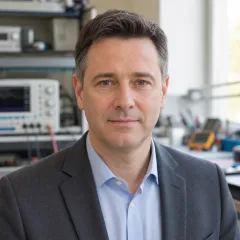
Marcus Feld
Marcus Feld is an electrical test and measurement analyst specializing in multimeters, oscilloscopes, clamp meters, insulation testers, spectrum analyzers, and data loggers. He applies IEC 61010-2-030 and IEC 61010-031 concepts while examining measurement category, bandwidth, true-RMS response, input loading, and stated uncertainty. His work helps maintenance engineers and test teams choose safe instruments with performance suited to the signals and environments they actually measure.