Technical note
The $27,000 Lab Equipment Lesson: Zeiss vs Global, Starrett vs Mitutoyo, and What Actually Deserves a Premium
-
The comparison framework I use before buying anything
-
Zeiss vs Global Dental Microscope: not the comparison I expected
-
Zeiss Axioskop Microscope: the trap is never the microscope itself
-
Pipettes and Spectrophotometers: the boring gear that wrecked a project
-
Starrett vs Mitutoyo Calipers: the debate that causes more wasted hours than anything else
-
What I would buy now—and what I would skip
I've been managing equipment orders for a clinical and light industrial lab group for about eight years. In that time, I've personally made and documented six significant procurement mistakes—totaling roughly $27,000 in wasted budget. This article is basically the checklist I wish I had in 2017, before the first expensive screw-up.
The comparison framework I use before buying anything
When I first started doing procurement, I assumed the lowest quote was always the best choice. In my first year (2017), I made the classic mistake of approving a $3,200 order based only on price. Three budget overruns later, I realized that was nonsense. I was comparing prices, not costs. The real comparison, for any lab instrument, comes down to five questions:
- Does the accuracy and performance actually matter for our specific use case?
- What is the total cost of installation, training, maintenance, and consumables?
- Can the vendor commit to a delivery date—and live by it?
- How fast can they fix it when it breaks?
- Is calibration data traceable, not just printed out?
That last one burned me the most. Per FTC guidelines, accuracy claims in advertising have to be substantiated. In practice, that means a vendor can say almost anything on a sales call, but the calibration certificate is the only thing that actually counts. If they can't show you the data, treat the spec sheet as an aspiration, not a fact.
This all sounds obvious after the fact. It wasn't obvious in 2017.
Zeiss vs Global Dental Microscope: not the comparison I expected
The dental microscope question is the one I get asked most often. A surgeon says 'Zeiss is the gold standard.' The ops manager sees the price difference and says 'Global looks basically the same on paper.' Honestly, both are right, which is why this comparison is so annoying.
Everything I'd read said premium optics always win. In practice, for a 30-minute endodontic procedure, I can't tell the difference. For a multi-hour surgical session, I can. The Zeiss optics feel easier on the eyes after hour three. The depth of field, color fidelity, and ergonomics are excellent. Global is also very good—and in many offices, 'very good' is genuinely enough.
But the deciding factor for us was not the optics. It was the install date. In Q1 2024, a clinic had a fixed grant deadline. Zeiss quoted a 10-week lead time. Global quoted 6 weeks and a firm install date. We went with Global. That looked like a downgrade on paper, but it was the right operational call because the grant would have been gone if we waited.
Underestimated variable: service. If your practice already has Zeiss service contracts and staff who know the system, staying with Zeiss simplifies your life. If you're starting from zero, Global has a strong case. The cost gap is real, but the service ecosystem matters more than the name on the arm.
So here is the counterintuitive bit: for a general dental clinic, Global is probably the right choice. Zeiss is the premium choice, not the automatic choice.
Zeiss Axioskop Microscope: the trap is never the microscope itself
I need to be careful here, because the Zeiss Axioskop is genuinely a great lab microscope. The one I bought in 2021 for a pathology station taught me a lesson that has nothing to do with the optics.
I saw a used Zeiss Axioskop microscope priced $6,000 under a comparable new system. The frame was solid, the objectives were clean, and I convinced myself I had saved the budget. Then I priced the rest of the system: a fluorescence filter cube, camera adapter, and installation visit. That added roughly $4,850 plus a three-week delay. The original 'deal' was gone.
If you are comparing a complete used Axioskop configuration against a new entry-level system, do the comparison by total system cost. The microscope body on its own is not the whole product.
One more thing: if the seller can't show documentation about service history, treat the quote as incomplete. We now put 'including all adapters, filters, and install labor' in every quote request.
Pipettes and Spectrophotometers: the boring gear that wrecked a project
The embarrassing mistakes are always the small ones. In 2019, I ordered 16 pipettes and a spectrophotometer from a distributor that was 15% cheaper than our usual supplier. The upside was maybe $480 in savings. The risk was a vendor we had never used before. I signed it anyway.
The pipettes showed up a day late, two had wonky tips, and the calibration certs came from a lab I couldn't verify. The spectrophotometer needed a dedicated PC with an OS the vendor forgot to mention. That 'savings' turned into $890 of IT time and a two-week delay.
For pipettes, don't let 'factory calibrated' do the heavy lifting. According to ISO 8655, pipette verification should be a gravimetric test done with a calibrated balance and documented results. A sticker is not verification.
For spectrophotometers, the question is not just 'what is the wavelength range?'—it is 'who will calibrate and service it locally?' We almost bought a unit with no local support. When it needed a lamp replacement, the quote was half the unit price and the part took a month. The instrument was fine; the service chain was not.
Starrett vs Mitutoyo Calipers: the debate that causes more wasted hours than anything else
The caliper brand war is out of proportion to the price. But I manage our tool inventory, so I have owned both. The practical differences are not what the internet says.
Mitutoyo's digital calipers are the default in our QC room because they output directly to our SPC software and use an absolute scale—you can turn them off and not lose zero. Starrett's dial calipers are beautiful, battery-free, and great for quick checks. Neither is more accurate for our tolerances. We work within 0.001 inch; both brands exceed that.
The deciding factor for us was the local distributor. The Mitutoyo vendor could recalibrate in three days; the Starrett vendor quoted two weeks. That made the decision easy. If you are feeding data into a Zeiss CMM or any SPC package, the digital output option also matters more than the brand name.
If you are comparing Starrett vs Mitutoyo calipers, forget the brand loyalty and compare calibration turn-around time first. That is the part that affects your actual work.
What I would buy now—and what I would skip
If one vendor can commit to a delivery date and the other is 'probably' around the same time, choose the first one. This is not boring advice. It is the advice that has saved us the most money. In March 2024, we paid $400 extra for rush delivery of a replacement camera. I kept asking myself: is $400 worth potentially missing a $15,000 imaging session? It was not even a close call. The fee was annoying. The missed session was irretrievable.
- Dental microscope: If you are doing long microsurgery days, put Zeiss on the list. If you are doing standard dental cases and have a hard deadline, Global is a legitimate option. Let the install date be part of the spec.
- Lab microscope: A complete used Zeiss Axioskop microscope system can be a solid value. A partial one is a parts project. Compare the full configuration.
- Pipettes and spectrophotometer: Buy where calibration support and service speed are documented. The instrument is only as reliable as the people who maintain it.
- Calipers: Pick Starrett or Mitutoyo, standardize, and set a calibration schedule. Then argue about something useful.
Since I started the checklist in 2022, we have caught 47 potential order errors in 18 months. Most were missing calibration certs and unclear delivery commitments. The common thread is not brand. It is certainty. In the lab, certainty of delivery, calibration, and service is worth paying for. I learned that the expensive way, so maybe you don't have to.
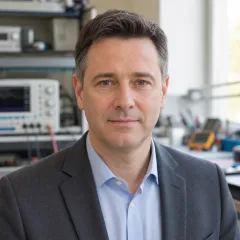
Marcus Feld
Marcus Feld is an electrical test and measurement analyst specializing in multimeters, oscilloscopes, clamp meters, insulation testers, spectrum analyzers, and data loggers. He applies IEC 61010-2-030 and IEC 61010-031 concepts while examining measurement category, bandwidth, true-RMS response, input loading, and stated uncertainty. His work helps maintenance engineers and test teams choose safe instruments with performance suited to the signals and environments they actually measure.